Let's Talk

Need More Online Growth? Accelerate Your Business with Smarter Marketing Solutions.

How can your business reach the right audience and generate more leads?

The answer lies in combining smarter marketing solutions to improve online visibility, attract potential customers and build a strong digital presence. Today, simply having a website or social media account is no longer enough. Customers search on Google, explore social media and increasingly turn to AI-powered platforms like ChatGPT and Gemini to discover businesses. If your brand isn’t visible where your potential customers are searching, you could be missing valuable growth opportunities.

This is where smarter marketing solutions come together to help your business get noticed, connect with the right audience and grow.

Why Does Your Business Need Smarter Marketing Solutions ?

Many businesses struggle to achieve consistent online results despite investing in websites and promotions. Common challenges include:

  • Low Search Rankings: Your website isn’t appearing in relevant Google search results.
  • Limited Website Traffic: Not enough potential customers are visiting your website.
  • Poor Brand Visibility: Your target audience isn’t discovering or recognising your brand.
  • Fewer Quality Leads: Your online platforms aren’t generating enough genuine enquiries.
  • Changing Search Behaviour: Customers are increasingly using AI-powered platforms to find information and recommendations.

Overcoming these challenges requires a connected approach to search visibility, content and online promotion. Here’s what can help:

SEO: Improve Your Visibility on Search Engines

Search Engine Optimization (SEO) involves optimising your website to improve its visibility in organic search results. It helps potential customers discover your business when they search for relevant products or services on Google and other search engines.

How SEO Helps Your Business:

  • Improves organic search rankings.
  • Attracts relevant website traffic.
  • Targets keywords your potential customers use.
  • Enhances website performance and user experience.
  • Builds online credibility through useful content.
  • Supports long-term organic growth.

SEO is not just about ranking higher; it’s about connecting your business with people actively looking for what you offer.

AEO: Improve Your Visibility in AI-Powered Search

Search behaviour is evolving beyond traditional search engines. People increasingly use AI platforms like ChatGPT and Google Gemini to ask questions, find recommendations and explore solutions. Answer Engine Optimization (AEO) focuses on structuring and optimising website content so that search engines and AI-powered platforms can understand and potentially reference it when generating relevant answers.

Why AEO Matters:

  • Improves opportunities for visibility across AI-powered search platforms.
  • Helps your content answer relevant customer questions.
  • Makes website information clearer and easier to understand.
  • Builds topical authority through informative content.
  • Helps your business adapt to changing search behaviour.

While SEO focuses on organic search visibility, AEO places additional emphasis on answer-focused content and AI search discovery. Both work together to strengthen your online presence.

Digital Marketing: Reach, Engage and Convert Customers

Getting discovered online is only the beginning. Your business needs smarter marketing solutions to engage potential customers, communicate its value and encourage them to take action. Digital Marketing helps businesses promote their products and services through various online channels.

Key Digital Marketing Services Include:

  • Social Media Marketing (SMM): Build brand awareness and connect with audiences through Facebook, Instagram and LinkedIn.
  • Search Engine Marketing (SEM): Use paid search campaigns to reach customers actively looking for your services.
  • Content Marketing: Create blogs, articles, videos and other valuable content to build brand credibility.
  • Paid Advertising: Run targeted campaigns to promote your business and generate enquiries.
  • Lead Generation: Attract potential customers through landing pages, online campaigns and enquiry forms.
  • Performance Tracking: Monitor website traffic, campaign results and conversions to improve marketing performance.

A well-planned digital marketing approach helps turn online visibility into meaningful customer engagement and business opportunities.

How SEO, AEO & Digital Marketing Work Together

SEO, AEO and Digital Marketing address different aspects of online growth, but the combined impact of these marketing solutions can deliver even greater value to your business.

SEO helps customers discover your website through traditional search engines. AEO makes your content more accessible to AI-powered answer platforms. Digital Marketing promotes your brand across social media, search advertising and other online channels.

Together, they help businesses:

  • Improve visibility across search engines and AI platforms.
  • Reach relevant audiences through multiple digital channels.
  • Build brand awareness and online credibility.
  • Attract website traffic and generate quality leads.
  • Create better opportunities for sustainable growth.

Instead of relying on a single marketing channel, businesses can build a more effective online presence by integrating these services.

How Integrated Marketing Solutions Benefit Your Business:

Every business has different marketing goals, target audiences and growth challenges. Choosing the right marketing solutions can help your business build a stronger online presence, reach potential customers and achieve better digital results. By integrating SEO, AEO and Digital Marketing, businesses can benefit from a connected approach to online promotion rather than relying on individual marketing activities.

  • Stronger Online Visibility: Improve your brand’s presence across search engines, AI-powered platforms and social media.
  • Better Audience Reach: Connect with potential customers through relevant search results, engaging content and targeted campaigns.
  • Improved Brand Credibility: Build customer trust through informative content and consistent online communication.
  • Smarter Marketing Decisions: Use performance insights and audience behaviour to refine your marketing strategies.
  • Sustainable Business Growth: Create more opportunities to attract potential customers, generate quality leads and strengthen your digital presence.

The right combination of marketing solutions helps your business stay competitive in an evolving digital landscape while building a foundation for long-term online growth.

Ready to Turn Your Business Goals into Real Growth? 

Building a successful online presence takes more than just a website or social media posts. It requires the right mix of search visibility, audience engagement and strategic promotion through smarter marketing solutions.

Imagic Digital, an initiative of IMAGIC, brings 16 years of experience together to help businesses improve online visibility, reach the right audience and generate growth opportunities with SEO, AEO & Digital Marketing services. From SEO and AI search optimization to social media marketing, paid campaigns and content strategy, we help your brand build credibility, attract potential customers and grow sustainably.

Ready to grow your business with Imagic Digital?
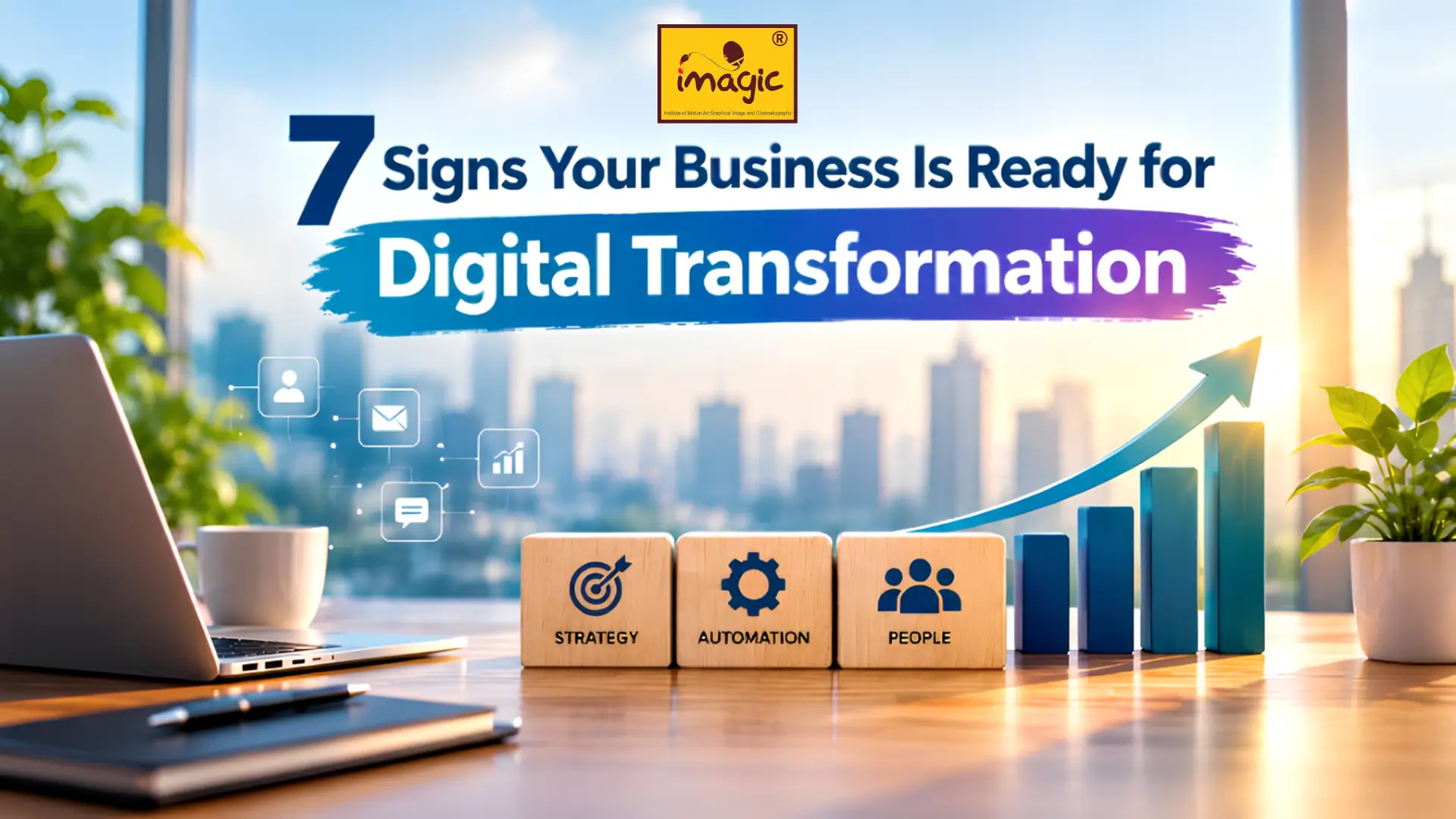
7 Signs Your Business Is Ready for Digital Transformation

Every business owner knows this moment. A task that should take minutes eats up an afternoon. A new enquiry arrives on WhatsApp and gets answered a day late. The same details get typed into three different places, and nobody is quite sure which version is correct.

None of this means your business is doing something wrong. It usually means the business has grown faster than the way it operates. That is exactly when digital transformation starts to make sense, as long as it is built around a clear growth plan and not just new software.

In this guide, we’ll explain what digital transformation really means, the seven signs your business is ready for digital transformation, and the three layers that make it work: strategy, automation, and people.

What Is Digital Transformation, Really?

Digital transformation isn’t about buying the latest tools or moving everything online overnight. It’s the way of modernizing your business operations, sales and customer service, implementing digital systems and smarter processes that support a clear business goal.

Digital transformation works best for a growing business in three layers:

  • Strategy: Know how your business works today and where you are losing growth.

  • Automation: connecting your tools and removing manual work so processes run smoothly.

  • People: helping your team use new systems and AI tools confidently, so the change sticks.

When these three work together, digital transformation stops being a cost and becomes a growth engine. The approach is simple: strategy first, technology second, growth always.

Signs Your Business Needs Digital Transformation

1. Repetitive tasks are taking over your team’s week

Data entry, manual reports, copying details between sheets, chasing approvals. If skilled people spend a large part of their week on routine work, that is time not going toward customers or growth. Workflow automation is often the quickest win in any digital transformation journey, because it gives hours back to your team almost immediately.

2. Leads and follow-ups are slipping through the cracks

An enquiry comes in, someone means to call back, and then the day gets busy. If your leads live in inboxes, notebooks, or memory, some opportunities will always be missed. A well-set-up CRM with automated lead management is a core part of digital transformation, because it ensures every enquiry is captured, tracked, and followed up on time.

3. Customers expect faster replies than you can give

People now message businesses the way they message friends, and they expect quick answers, often on WhatsApp. If your team struggles to keep up with questions, quotes, and support requests, the gap shows up in lost sales. Automated chat and messaging flows can handle routine conversations instantly and pass the important ones to your team.

4. Your tools don’t talk to each other

Your marketing platform, sales tracker, accounting software, and operations tools may each do their job well. But if you are manually moving information between them, every handoff is a chance for delays and errors. Digital transformation connects these tools into one smooth flow from first enquiry to final delivery.

5. Growth is making things harder, not easier

More customers, more staff, more locations: growth should feel exciting. If it mostly brings confusion and bottlenecks, your processes may have reached their limit. Processes that worked at ten customers can strain at a hundred. A proper business process audit is the best starting point for digital transformation, because it shows exactly where time, effort, and money are being lost.

6. You can’t clearly see where your revenue comes from

Which services bring the most profit? Where do leads drop off? How do you compare with competitors in your market? If these questions are answered by instinct rather than insight, you may be missing easy opportunities. Revenue planning, clear market positioning, and a sharper sales strategy turn guesswork into decisions you can trust.

7. Your team is curious about AI, but nobody knows where to start

AI tools can help with writing, sales follow-ups, reporting, and everyday operations. But without guidance, teams often try a few tools, get mixed results, and move on. Modern digital transformation includes AI adoption, and the missing piece is usually training and a plan for how AI fits into daily work.

Why Digital Transformation Needs Strategy, Not Just Software

Here is something many businesses discover along the way: the hardest part of digital transformation is rarely the technology. It is deciding what to change first, what can wait, and how each decision supports the bigger picture.

Without a plan, businesses can end up with tools that don’t connect, systems their teams don’t use, and spending that never shows up in results. With a clear digital transformation strategy, the same investment becomes focused and measurable.

A good digital transformation roadmap usually follows these steps:

  1. Audit how work really happens. Map your key processes from first enquiry to final delivery and find where time and revenue are lost.

  2. Set your growth goals. Decide what success looks like: more leads, faster delivery, lower costs, happier customers.

  3. Prioritise by impact. Not everything needs to change at once. Start where the benefit is clearest.

  4. Automate and connect. Set up the systems, such as CRM, workflows, and integrations, that remove manual work and keep information flowing.

  5. Train your team. New systems only work when people feel confident using them, including the AI tools that can make daily work faster.

  6. Measure and refine. Track results, learn what works and keep getting better step-by-step.

Notice that most of these steps involve planning and people, not just technology. That is why many businesses turn to digital transformation consulting early, so the plan is solid before the first tool is introduced.

Final Thoughts on Digital Transformation

Being ready for digital transformation is not a sign that something has gone wrong. More often, it is a sign of success: your business has grown, your customers expect more, and your processes are ready to grow with you.

You don’t need to do everything at once, and you don’t need all the answers today. What helps most is a clear view of where you are, where you want to go, and the most practical route between the two. With the right strategy, the right systems, and a team that knows how to use them, digital transformation is less of a scary project and more of a series of smart, confident steps towards measurable growth.

Ready to Start Your Digital Transformation With a Plan?

At Imagic Digital, our Business Growth Consultancy is built to guide exactly this kind of digital transformation. Which is a new initiative taken by IMAGIC. With 16 years of experience we start with your business, not the software, through process audits, growth roadmaps, and sales and operations strategy. We then help put the plan into action with system automation, including CRM and lead management setup, WhatsApp and chatbot automation, workflow automation, and tool integration. And we make sure your team can run with it through AI-powered training and a custom AI adoption roadmap.

If any of the signs above sound familiar, get in touch with Imagic Digital for a conversation about your goals. We’ll help you decide what to do first, what can wait, and how to move forward with confidence.

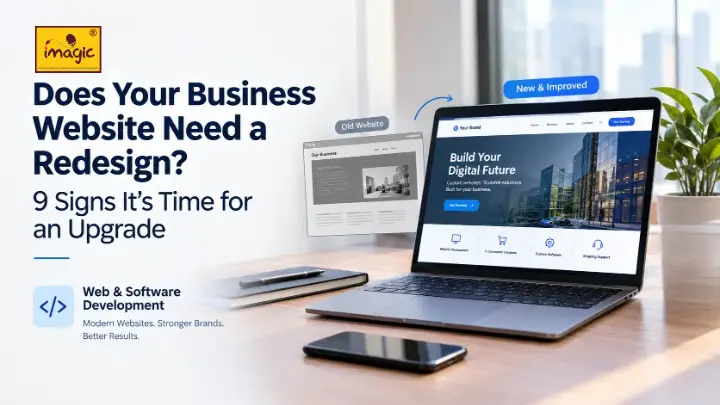
Does Your Business Website Need a Redesign? 9 Signs It’s Time for an Upgrade

Your website is often the first real interaction a customer has with your business. If it feels outdated, loads slowly, or makes it difficult to take action, visitors may quietly move on to a competitor without ever contacting you. A redesign is not just about a new look—it is about creating a faster, clearer, and more useful experience that supports growth.

 Why Your Website Matters

A good business website works like a digital front door. It introduces your brand, explains your services, answers common questions, and encourages visitors to contact you, book a service, request a quote, or make a purchase.

Over time, even a website that once performed well can fall behind. Customer expectations change, mobile usage grows, technology improves, and your business itself may evolve. If your website no longer reflects your current goals or supports the way customers browse online, an upgrade can help you stay competitive.

9 Signs It’s Time for a Redesign 

  1. It doesn’t work well on mobile 

Most people will visit your website from a smartphone. If visitors have to pinch, zoom, or scroll sideways to read your content, they’re likely to leave. A mobile-friendly website should automatically adjust to different screen sizes. Menus should be easy to open, text should be readable, forms should be simple to complete, and important buttons should be easy to find. 

  1. Your Pages Load Slowly 

Speed is important. If your website takes too long to load, visitors may lose patience and move on before they see your services. Slow websites can be caused by heavy images, outdated code, and aging hosting setups can all slow things down. Speed also affects how search engines view your site, so a slow page can cost you both visitors and visibility. 

  1. Your Website Is Difficult to Navigate

A website should help visitors find the information they need without unnecessary effort. If users struggle to locate service details, contact information, pricing information, or important pages, they may leave before taking the next step. 

Clear navigation helps visitors feel in control. It also helps search engines understand your website and index your pages properly. 

  1. Your Website Design is Outdated or Incomplete 

First impressions matter. If your website has an outdated design, old images, cluttered pages, or a style that no longer matches your brand, visitors may question the quality of your business.

A modern design does not need to be complicated. Clean layouts, readable text, clear headings, and consistent branding can make your business appear more credible and professional. 

  1. Your Website Is Not Ranking Well on Search Engines 

If your rankings have dropped or never improved despite your efforts, the cause is often technical: If your website is difficult for search engines to read,poor site structure, loads slowly, or is not mobile-friendly, slow performance, or content that isn’t organised for how people search today.  it may struggle to appear in relevant search results.

  1. Your Website Generates Fewer Enquiries Than Expected 

Website traffic is useful, but attracting visitors is only part of the goal for many businesses,  but rarely contact you, fill in a form, request a quote, or buy anything, something may be blocking them.
Common issues include unclear messaging, weak calls to action, complicated forms, missing contact details, or pages that do not clearly explain what you offer. A redesign can create a simpler path from interest to action.

  1. Your Website Is Difficult to Update

A website should be able to support the business as its requirements change. If adding a new service page, updating a section, integrating a form, or introducing a new feature requires excessive time or technical work, the existing system may be limiting future growth. 

A modern website can include an easy-to-use content management system, allowing your team to keep information accurate and up to date. 

  1. Your Website No Longer Supports Your Business Goals 

Your website should grow with your business. If you have added new services, changed your pricing model, updated your brand identity, expanded locations, or started targeting a different audience, your website should reflect those changes. 

An outdated website can make customers unsure about what you currently offer. Refreshing your content, design, and structure helps your online presence match your present business direction. 

  1. Competitors Have a Better Online Presence 

Sometimes the clearest sign is comparison. If competitors have websites that are easier to use, clearer in their messaging, faster to load, or more convincing, potential customers may choose them—even if your actual service is equally strong or better. 

This does not mean copying competitors. It means identifying what your website is missing and building a better experience for your own audience.


Website Redesign vs. Website Improvement: Which Do You Need?

Recognising these signs is only the first step. The next is deciding how much change is actually necessary.

A complete redesign may be appropriate when the website has fundamental usability problems, outdated architecture, major performance limitations, or a structure that no longer matches the business. Targeted improvements may be sufficient when the core website works well but needs better content, faster loading, clearer calls to action, or a more responsive layout.

Before making a decision, consider three questions:

  • What is not working? Identify the specific problems through website analytics, customer feedback, performance tests, and technical reviews.
  • What needs to change? Establish clear priorities, whether they involve design, functionality, content, performance, security, or lead generation.
  • What will success look like? Define measurable outcomes, such as more qualified enquiries, fewer usability problems, improved loading performance, or better completion rates for important forms.

What a Website Redesign Can Improve

A thoughtful redesign can help your business in several practical ways:

  • Create a stronger first impression
  • Improve mobile usability and page speed
  • Make services and contact details easier to find
  • Encourage more enquiries, bookings, or sales
  • Reflect your current brand and business goals
  • Improve search-engine visibility
  • Make website updates simpler for your team
  • Build a more secure and scalable online platform

The best redesign starts with your customers: what they need, what questions they have, and what action you want them to take.

Conclusion

Your website should not just exist online—it should actively support your business. If it looks outdated, performs poorly on mobile, loads slowly, confuses visitors, or fails to generate enquiries, these are strong signs that an upgrade could be worthwhile.

A well-designed website can improve trust, user experience, visibility, and conversions. More importantly, it can help your business present itself clearly and confidently in a competitive digital world.

Need a Website That Supports Your Business Growth? 

Imagic Digital provides professional Web & Software Development services for businesses that want a modern, reliable, and results-focused online presence. Whether you need a complete website redesign, a custom business website, an e-commerce platform, or tailored software development, Imagic Digital can help you build a digital solution that fits your goals.

If your current website is no longer delivering the experience or results your business deserves, now is the right time to explore a smarter upgrade.

Get in touch with ImagicDigital today to discuss your website redesign or custom web and software development needs.

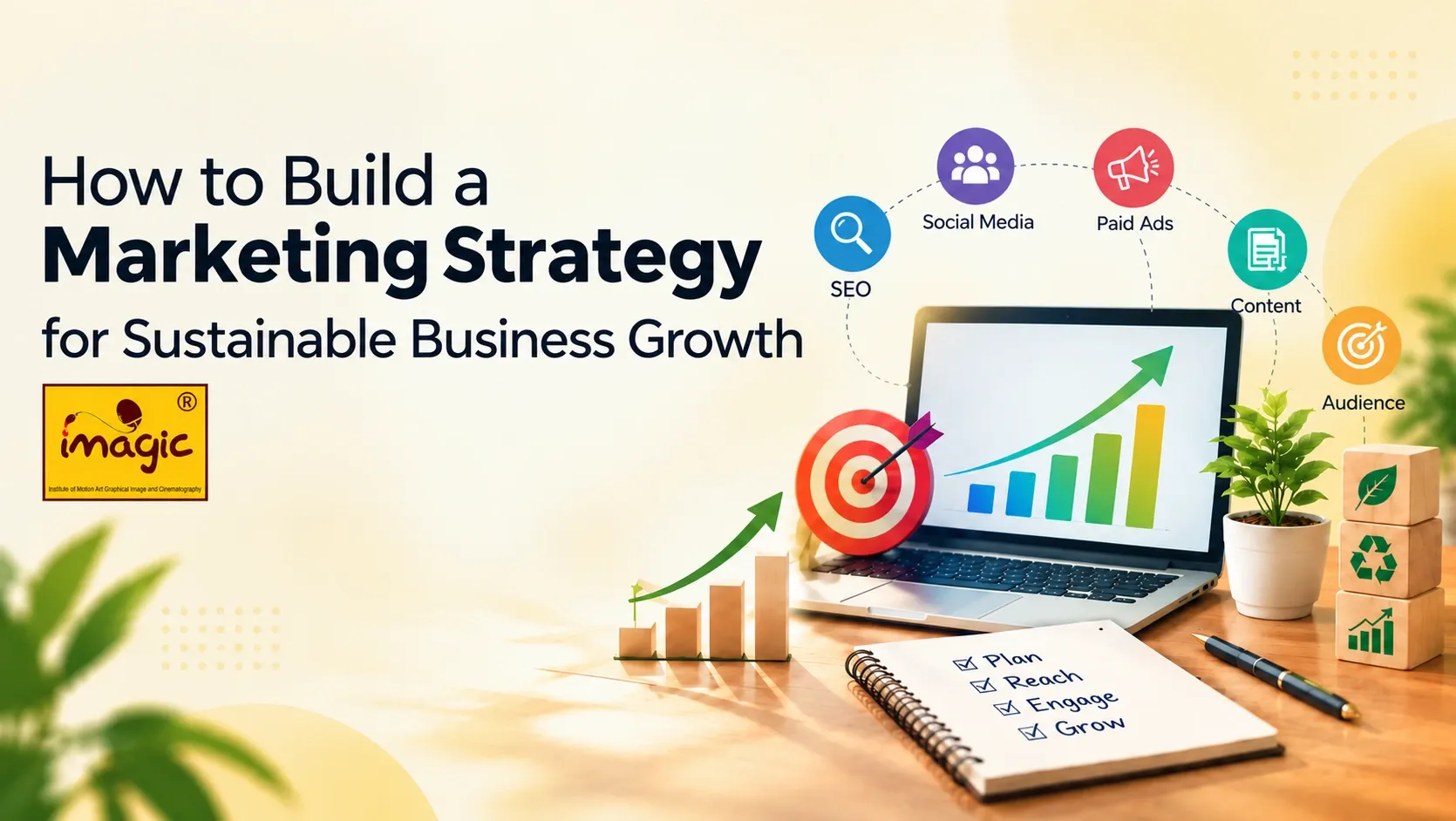
How to Build a Marketing Strategy for Sustainable Business Growth

Are your marketing efforts actually driving growth—or are you simply staying visible?

In 2026, a strong marketing strategy is no longer optional for businesses looking to grow in an increasingly digital world. Businesses need to reach the right audience, build trust, stay visible across digital platforms, and turn attention into measurable growth. With customers using search engines, media and AI-powered platforms to discover and evaluate businesses, a strong marketing strategy has become essential for sustainable growth.

What is a Marketing Strategy?

Marketing strategy is a structured plan for reaching your audience, communicating brand values, promoting products or services, and achieving your business goals.

It can bring together multiple activities, including:

  • SEO and AEO
  • Social Media Marketing
  • Paid Advertising
  • Content Marketing
  • Lead Generation
  • Performance Tracking

The right combination depends on your business, audience, industry, and objectives. A well-planned marketing strategy brings these activities together to improve visibility, reach, engagement, and measurable business growth.

 Why Do You Need a Strong Marketing Strategy?

Marketing without a strategy can waste time and resources. A well-planned approach helps you reach the right people, build your brand, and drive meaningful results. 

  • Reach the Right Audience:

Not every visitor is a potential customer. A focused marketing strategy helps you understand your audience, identify their needs, and choose the channels where they are most likely to engage. This allows businesses to create more relevant content, campaigns, and offers, while improving the quality of their leads.

  • Improve Online Visibility:

Customers can discover businesses through Google searches, social media, reviews and websites. SEO helps businesses improve their visibility in relevant searches, while AEO focuses on creating clear, useful content that addresses the questions customers are asking. Together they can help businesses stay discoverable as search behavior continues to evolve.

  • Build Trust and Brand Recognition:

Visibility is only the beginning. Customers also need a reason to trust your business. Consistent engagement across social media, advertisements, and content can strengthen brand recognition and establish credibility. A strong marketing strategy ensures that every digital platform works toward the same brand direction.

  • Generate Better Leads:

Marketing should do more than bring traffic. It should attract people who are genuinely interested in what your business offers. By combining targeted content, SEO, social media, paid campaigns and conversion-focused strategies , businesses can create a clear path from discovery to enquiry.

  • Make Better Decisions with Data:

Digital marketing provides valuable information about what your audience responds to. Businesses can track website traffic, conversions, lead generation etc. Using these insights allows businesses to identify what is working, improve what is not, and make smarter marketing decisions.

  • Adapt to Changing Search & AI Discovery:

Customers are no longer relying only on traditional Google searches to find information and businesses. AI-powered platforms and answer engines are becoming part of the discovery journey. A modern marketing strategy helps businesses create useful, structured, and trustworthy content that can be discovered across search engines, social platforms, and AI-driven experiences.

  • Create a Consistent Customer Journey:

Customers may discover your business through search, social media, advertisements, or AI-powered platforms before visiting your website or contacting you. A strong marketing strategy connects these touchpoints, creating a consistent experience from first discovery to enquiry and conversion.

How Marketing Strategy Turns Visibility Into Growth:

Being visible online does not automatically mean your business is growing. Your brand may appear in search results, social media feeds, or paid campaigns, but if that visibility does not reach the right audience or encourage action, it has limited business value.

A strong marketing strategy connects visibility with purpose. It helps businesses identify the right audience, choose the right channels, communicate a clear message, and guide potential customers from awareness to consideration and, ultimately, conversion.

With a well-planned strategy, businesses can:

  • Reach the right audience instead of trying to reach everyone.
  • Build brand awareness and trust through consistent messaging and valuable content.
  • Increase engagement by creating content that addresses real customer needs.
  • Generate qualified leads through targeted campaigns and optimized digital channels.
  • Improve conversions by connecting marketing efforts with clear customer journeys.
  • Measure performance and use data to understand what is working and where improvements are needed.

The goal is not simply to get more views, clicks, or followers. It is to turn attention into meaningful interactions, interactions into customers, and customers into long-term business growth.

How Imagic Digital Can Help:

At Imagic Digital, we combine marketing, branding, technology, and business strategy to help businesses build stronger digital visibility and achieve sustainable growth. Our services include: 

Business Growth Consultancy: 

Strategic guidance to improve marketing, sales , operations, and overall business growth.

Digital Asset Management:

Managing and optimizing websites, social media, search and paid platforms for better digital performance.

SEO AEO & Digital Marketing :

Data-driven strategies to improve search visibility, reach relevant audiences, and drive measurable results.

Brand Building :

Building a strong, recognizable brand through strategic positioning, visual identity, and consistent communication. 

From building a strong market presence and improving customer experiences to streamlining processes, adopting smarter technologies, and identifying new growth opportunities, we help businesses make better decisions, improve performance, and build a stronger foundation for sustainable long-term growth.

Final Thoughts:

A strong marketing strategy gives your business clear direction in a changing digital landscape. By combining the right channels, data, and technology, businesses can reach the right audience, stay competitive, and turn digital efforts into sustainable growth.

Ready to Build a Stronger Marketing Strategy?

Whether you want to improve search visibility, strengthen your online presence, or build a result-driven marketing strategy, IMAGIC Digital brings you the expertise of IMAGIC, trusted since 2010, to help turn your digital efforts into sustainable business growth.

Get in touch with Imagic Digital today.

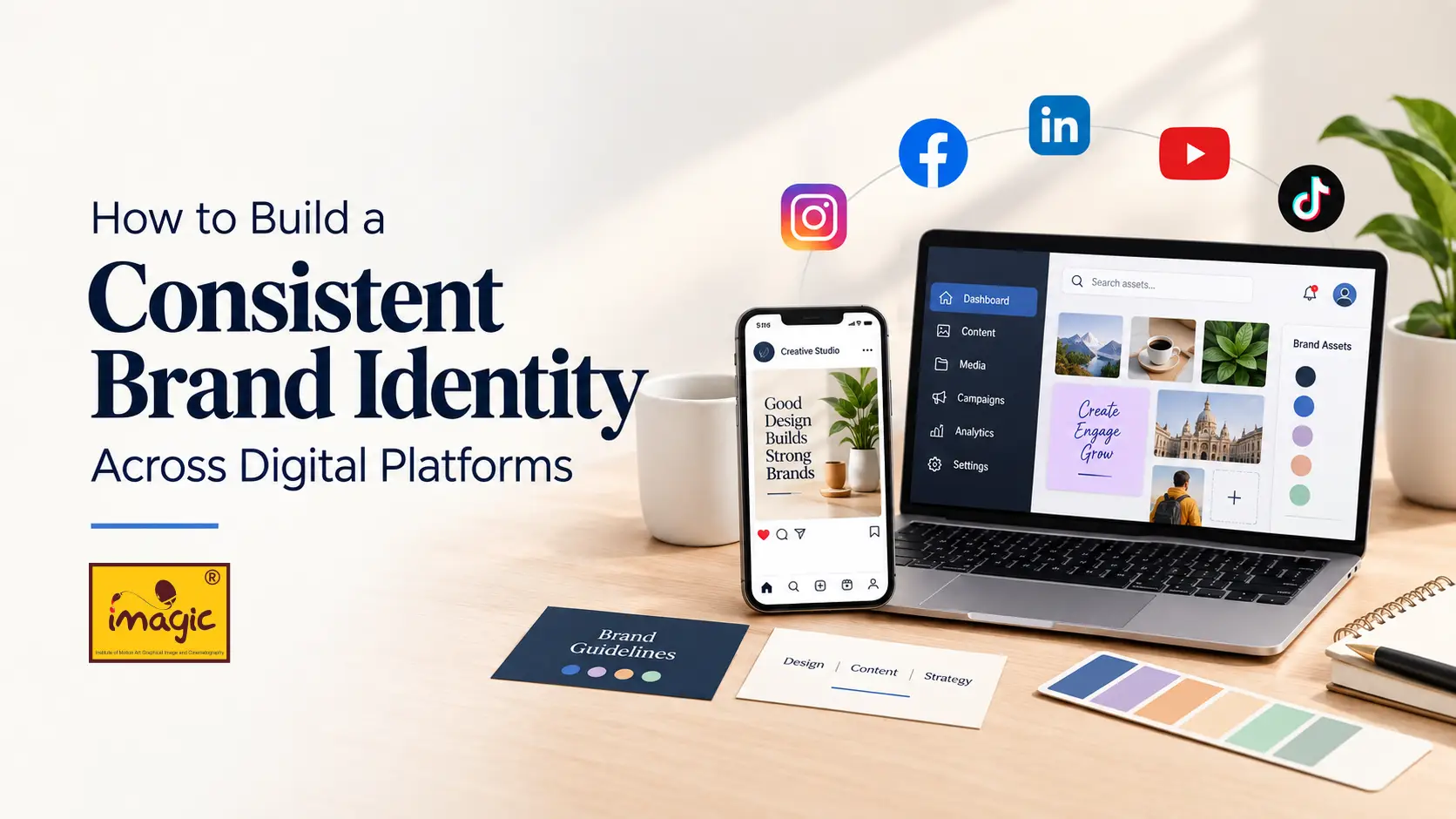
How to Build a Consistent Brand Identity Across Digital Platforms

Think of the last brand you recognised without seeing its name. It might have been the colours, the style of the images, or the way the posts were laid out. That recognition didn’t happen by accident. It came from consistent brand identity

Today, the audiences that  meet your brand in many places: an Instagram reel, a LinkedIn carousel, a Facebook offer post, a short product video. If each of those looks and sounds like it came from a different business, people struggle to remember you, and harder still to trust you.

This guide covers what brand identity means in practice, why consistency matters, and how to build it across every platform you use.


What Is Brand Identity (and What It Isn’t)

Brand identity is the set of visual and verbal elements that make your business recognisable. It includes your logo, colour palette, fonts, imagery style, tone of voice, and the way you present information.

It is not just a logo. A logo is one piece. Identity is what happens when all the pieces work together, post after post, platform after platform. which is why we need consistent brand identity for a successful business,

Start With a Clear Brand Foundation

Before creating posts, Reels, banners, or promotional videos, define the elements that make your brand recognisable.

A practical brand foundation should include:

  • Your brand’s purpose, values, and key message
  • The audience you want to speak to
  • A defined tone of voice: professional, approachable, bold, informative, premium, or playful
  • Logo usage rules, including placement, spacing, and approved versions
  • Primary and secondary colour palettes
  • Typography rules for headlines, body copy, and social creatives
  • An image, illustration, and graphic style
  • Guidance for how your brand speaks in captions, comments, advertisements, and calls to action

A documented brand or social-media style guide helps everyone involved in communication follow the same rules. It can cover visual identity, brand voice, preferred wording, hashtags, post formats, CTAs, content policies, and platform-specific conventions.adobe+1

Without this foundation, consistency often depends on individual designers, editors, or marketers. That makes the brand vulnerable to variation whenever the team, campaign, or platform changes.

Why Consistency Matters More Than Ever

  • It builds recognition. The more often people see the same visual style, the faster they connect it with your brand.
  • It builds trust. A consistent presence looks professional and dependable. Scattered visuals can make a business look unsettled.
  • It makes your content work harder. When people already recognise your style, they’re more likely to stop and read what you’ve shared.
  • It saves time. Clear brand rules mean fewer decisions and fewer revisions every time something new is created.

6 Steps to Build a Consistent Brand Identity

1. Define the Core of Your Brand

Before designing anything, get clear on who you are, who you serve, and how you want to be seen. Write down your brand’s personality in a few words, such as “friendly and simple” or “premium and polished.” Every design and caption decision should trace back to this.

2.  Build Branded Templates

Templates are where consistency becomes practical. Set up reusable layouts for:

  • Everyday social media posts
  • Carousels and infographics
  • Offer and promotional creatives
  • Festival and seasonal posts
  • Banners and covers

With templates, a new post doesn’t start from a blank page. It starts from your brand.

3. Adapt for Each Platform Without Losing Your Identity

Instagram, Facebook, and LinkedIn each have their own formats, audience habits, and ideal sizes. Your identity should stay the same while the packaging changes. A LinkedIn carousel may be more informative and an Instagram post more visual, but both should clearly belong to the same brand.

4. Extend Your Identity Into Video

Video is often where consistency breaks down. Reels, promotional videos, and product clips are made in a hurry, with different fonts, colours, and styles each time. Keep it unified by using:

  • Consistent colours, fonts, and caption styles
  • A recognisable intro, outro, or transition style
  • Branded motion graphics and animated elements
  • Repurposed versions of one video for each platform, rather than entirely new styles

5. Plan Your Content Instead of Posting Randomly

Consistency isn’t only visual. It’s also about showing up regularly with a clear message. A monthly content calendar helps you:

  • Plan festivals, offers, and launches ahead of time
  • Balance different types of content (educational, promotional, engaging)
  • Schedule posts platform by platform
  • Avoid last-minute designs that ignore your brand rules

6. Review, Measure, and Refine

Look at what’s working. Which posts get saved, shared, or clicked? Which formats get ignored? Regular performance tracking shows you what to keep, what to improve, and what to drop, so your identity stays consistent without becoming stale.

The Real Reason Brand Consistency Slips 

Most brands know what consistency looks like. The hard part is keeping it up every week. Colours and fonts shift from one post to the next, each platform starts to feel like a separate brand, videos drift away from the style of static posts, and last-minute designs ignore the brand guidelines. Knowing what to do is one thing. Doing it every week is another. Much of this happens because design, video, planning, and review are handled by different people, tools, or vendors, so the brand voice gets lost between handoffs. 

This is where creative management services helps. 

How Creative Management Keeps Your Brand Consistent

Creative management brings your design, video, and content planning into one organised process, so everything your brand publishes looks and feels connected. At Imagic Digital, our creative management service covers:

  • Graphic design: Social media post designs for Instagram, Facebook, and LinkedIn, branded templates, creative banners, festival and offer creatives, and carousel and infographic designs.
  • Video editing: Reels and short-form content, promotional and product videos, motion graphics, and video repurposing across platforms.
  • Content planning and management: Monthly content calendars, platform-wise scheduling, brand-consistent visuals across all posts, and content performance tracking.

Instead of coordinating multiple people and chasing consistency yourself, you get a single, planned approach where every post, reel, and creative follows the same identity.

Final Thoughts

A strong brand identity isn’t built with one great post. It’s built by showing up the same way, again and again, across every platform your audience uses. Define your foundations, build templates, carry your identity into video, plan your content, and keep refining. The brands that do this consistently are the ones people remember.

Ready to Make Your Brand Look Consistent Everywhere?

If you’d rather focus on running your business while your content stays organised and on-brand, ImagicDigital which is a new initiative from IMAGIC can help. Our creative management service brings together graphic design, video editing, and content planning so your brand shows up with clarity and consistency on every platform.

Get in touch with Imagic Digital to discuss your content needs and see how we can support your brand.